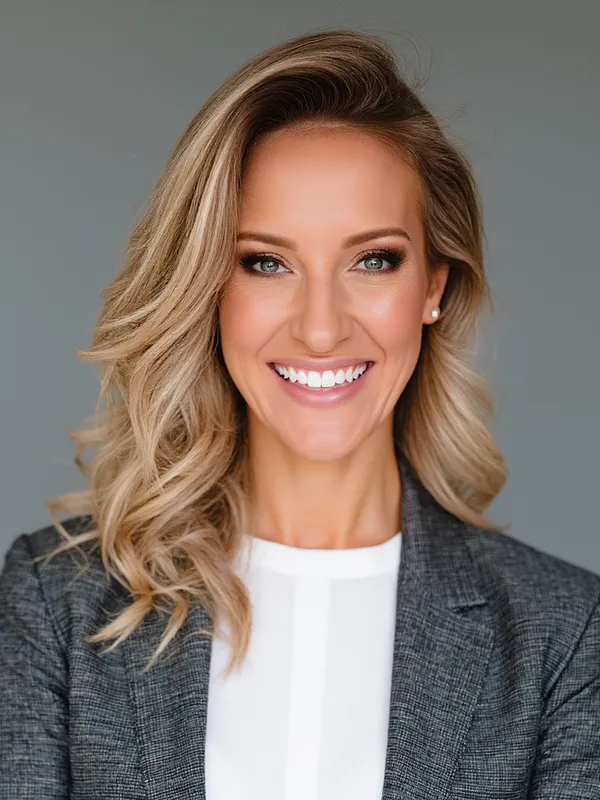
How to Be Photogenic: 12 Tips That Actually Work

Some people seem to look incredible in every photo while the rest of us delete nine out of ten. The good news: being photogenic is not a genetic gift reserved for a lucky few. It is a set of small, learnable habits around angles, lighting, and expression that anyone can pick up. This guide covers 12 practical tips to help you become more photogenic in selfies, group photos, and professional headshots alike.
What does it mean to be photogenic?
Being photogenic simply means looking good in photographs. But there is an important nuance: photogenic does not equal attractive. Plenty of people who look great in person struggle on camera, and vice versa. A camera flattens three-dimensional features into two dimensions, freezes micro-expressions that would be invisible in real life, and records light differently than our eyes perceive it. The result is that how you look in a photo is not how you look in the mirror.
Researchers at the University of New South Wales found that people rate the same face as less attractive in a still photo than in a video because movement adds expressiveness that a single frozen frame cannot capture. That means the camera is already working against you. The tips below work with the camera instead of against it.
Why some people look better in photos
Before we get to the how, it helps to understand the why. People who consistently look good in photos usually share a few habits, not physical traits:
- They know their angles. They have spent time figuring out which side of their face and which head tilt flatters them most, then they repeat it every time.
- They are comfortable on camera. Comfort reads as confidence, and confidence is universally attractive. The awkwardness you feel in front of a lens is visible in the photo.
- They understand light. Instinctively or deliberately, they position themselves where the light is most flattering, usually facing the primary light source.
- They smile with their eyes. A genuine smile engages the muscles around the eyes (called a Duchenne smile), not just the mouth.
Every one of these habits is learnable. The 12 tips below break them into concrete steps you can start using today.

How to be more photogenic: 12 tips
1. Find your best angle
Almost nobody looks their best straight on. A slight turn of 15 to 30 degrees to one side creates depth and slims the face. Open your phone's front camera and slowly rotate your head left and right. Save a screenshot of the angle you like best, then practice hitting that same position by feel. Most people prefer one side over the other, and that preference stays consistent for life. For a deep dive into angles, see our headshot poses guide .
2. Face the light
Lighting matters more than any filter. When the main light source is behind you, your face falls into shadow and the camera exposes for the bright background, turning you into a silhouette. Instead, face the light. Outdoors, that means turning toward the sun (or better, open shade lit by the sky). Indoors, stand near a window and look toward it. Soft, diffused light from a cloudy sky or a large window smooths skin, reduces harsh shadows under the eyes and nose, and makes your eyes pop. Avoid overhead fluorescent lights at all costs: they cast unflattering green tones and emphasize under-eye circles. Our lighting setup guide covers this in detail.
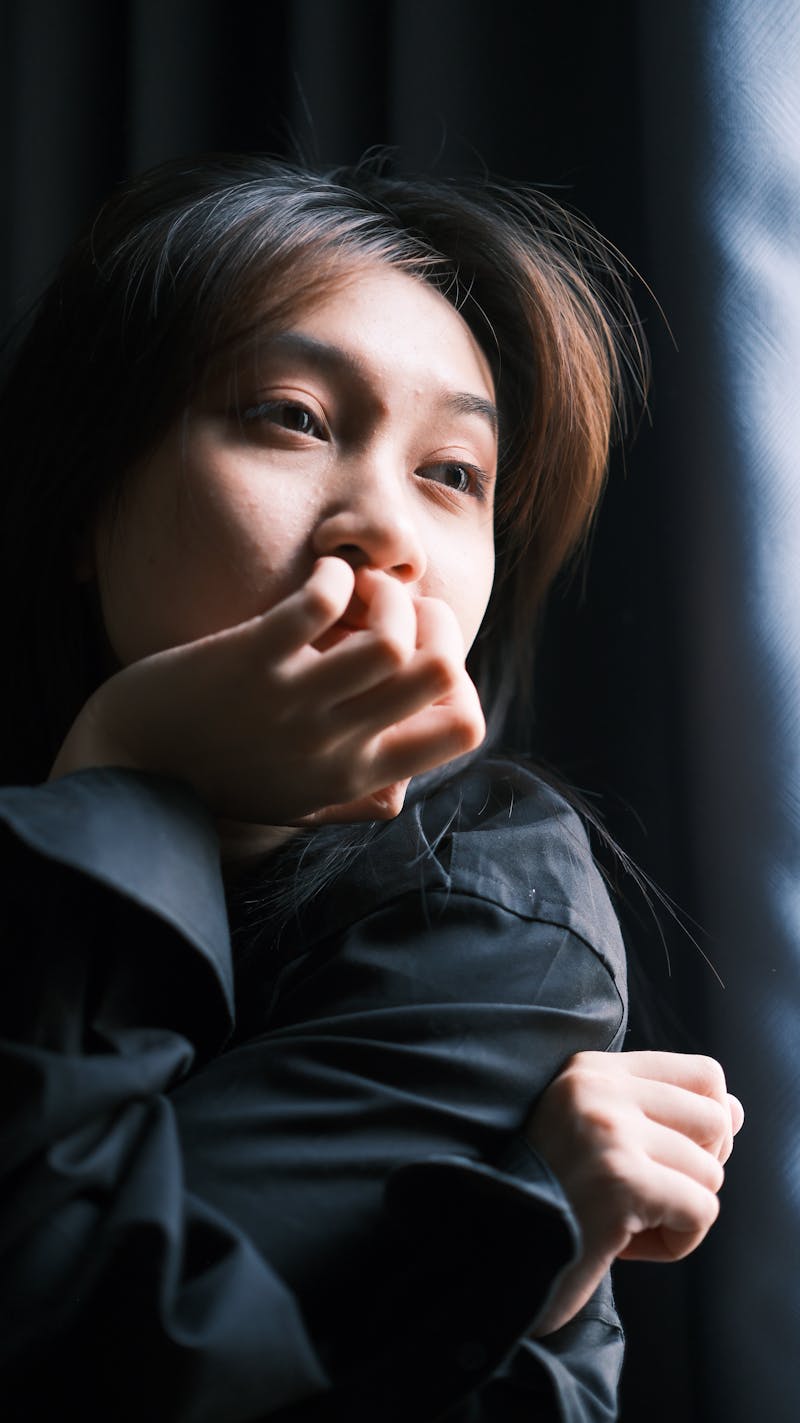
3. Push your chin forward and slightly down
This is the single most effective posing trick professional photographers use. Extending your chin forward (not up) separates it from your neck, defines your jawline, and eliminates any double-chin effect caused by the camera's perspective. It feels strange in real life but looks completely natural in photos. Practice in front of a mirror until it becomes muscle memory.
4. Relax your face before the shutter clicks
Tension shows instantly in photos, especially around the jaw and forehead. Before the camera fires, close your eyes, take a slow breath, relax your jaw (let it drop slightly open), then open your eyes and smile. Photographers call this the “reset.” It clears any forced expression and replaces it with a relaxed, approachable look. If you tend to look stiff in photos, this one habit alone will make a visible difference.
5. Smile with your eyes
The difference between a photogenic smile and a forced one is in the eyes. A genuine smile, known as a Duchenne smile, activates the orbicularis oculi muscles around the eyes, creating small crow's feet and slightly squinted lower lids. A fake smile only moves the mouth. To trigger a real smile on demand, think of a specific person who makes you laugh or a genuinely funny memory right before the photo is taken. The thought produces the emotion, and the emotion produces the expression.
6. Try the “squinch”
Coined by photographer Peter Hurley, the squinch is a subtle squint of the lower eyelid (not the upper). It narrows the eye opening slightly, projecting confidence instead of the wide-eyed deer-in-headlights look. The key is subtle: you are tightening the lower lid by maybe 10 to 20 percent, not closing your eyes. Compare a few selfies with wide-open eyes versus a gentle squinch and the difference in perceived confidence is dramatic.
7. Stand or sit at a slight angle
Facing the camera square-on makes your body look wider and your pose look rigid, like a mugshot. Turning your body 20 to 45 degrees to the side while keeping your face toward the camera creates a more dynamic, slimming silhouette. Drop the shoulder closest to the camera slightly to add a natural, relaxed feel. This is standard advice from portrait photographers and it works just as well for casual photos.
8. Wear solid, flattering colors
Busy patterns, logos, and thin stripes create visual noise that distracts from your face and can cause a shimmering moiré effect on camera. Stick to solid colors in mid-tones: navy, teal, burgundy, olive, and charcoal photograph beautifully on almost everyone. Avoid pure white (it can blow out and wash you out) and pure black (it absorbs light and hides your shape). For industry-specific advice, see our what to wear for headshots guide.
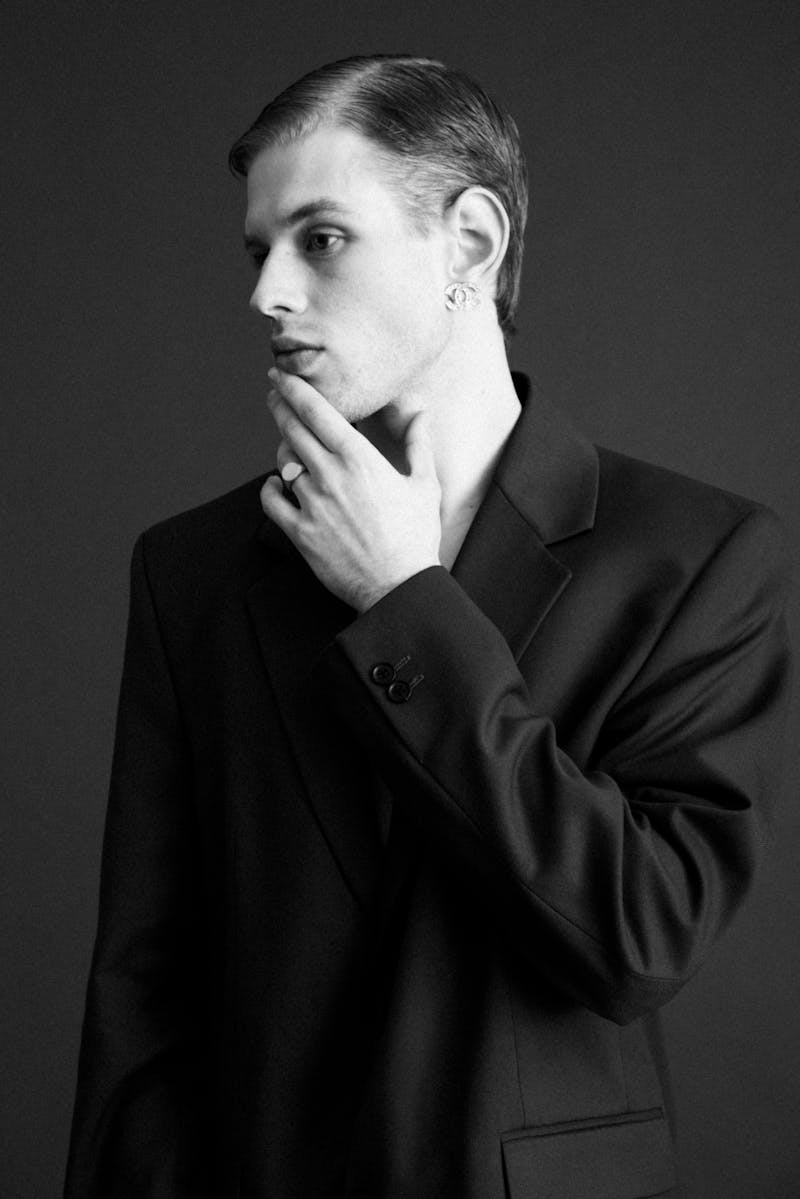
9. Pay attention to posture
Good posture instantly makes you look more confident, taller, and leaner in photos. Roll your shoulders back, lengthen your spine, and imagine a string pulling the top of your head toward the ceiling. Slouching pushes your chin into your neck and rounds your shoulders, both of which the camera punishes. Even in a seated headshot, sit on the front edge of the chair and straighten your back rather than leaning into the backrest.
10. Get the camera at the right height
Camera height changes how your proportions appear. A camera at or slightly above eye level (roughly at your forehead) is the most flattering for most faces: it slims the jaw and makes the eyes appear larger. A camera below your face exaggerates the chin and nostrils, which is why selfies taken from a low angle rarely look good. If you are taking a selfie, hold the phone slightly above your eye line and angle it down toward your face.
11. Take many more photos
Professional photographers take hundreds of shots to get a handful of keepers. You should too. Subtle shifts in expression happen between frames, and the “perfect” photo is usually one you did not plan. Use burst mode on your phone (hold down the shutter button) to capture rapid sequences. Then pick the best frame afterward instead of trying to nail it in a single click. Volume is how professionals get consistent results, and it works for everyone.
12. Practice regularly
The reason models look so good in photos is not genetics. It is thousands of hours of practice. You do not need thousands of hours, but you do need repetition. Take a quick selfie every morning for a week. Review what works (angle, expression, lighting) and what does not. Within a week you will notice which combinations produce your best photos. Within a month, hitting your best angle will be automatic.

Common mistakes that make you look less photogenic
Even with good technique, a few common errors can undo your efforts:
- Over-smiling. A wide, teeth-baring grin held for too long looks strained. A relaxed, closed-lip smile or a slight open-mouth smile usually photographs better than a full grin.
- Tilting your head too far. A slight tilt adds personality. A dramatic tilt looks unnatural and distorts your features.
- Standing directly under a light. Overhead lighting creates dark shadows in your eye sockets and accentuates wrinkles. Always position yourself so the light hits your face from the front or at a 45-degree angle.
- Relying on filters. Heavy filters are obvious to everyone except the person using them. They smooth away the texture that makes a face look real and human. Minor editing (cropping, exposure, white balance) is fine. Skin-smoothing filters are not.
- Using the rear camera at arm's length. A phone's rear camera has a narrower focal length that distorts facial features at close range, making your nose appear larger. Use the front camera for selfies, or better yet, use a tripod with a timer and the rear camera from three feet away.
The shortcut: let AI find your most photogenic look
If you need a professional headshot and do not want to spend hours perfecting your pose, lighting, and wardrobe, there is a faster path. Upload a few casual selfies to AiProPortrait and receive 40+ studio-quality headshots with optimized lighting, professional backgrounds, and polished expressions in under 30 minutes.
The AI generates hundreds of variations with different angles, expressions, and styles, effectively doing the “take many photos and pick the best one” approach at scale. Many customers tell us they discovered their most flattering angle from an AI-generated shot they would never have thought to try themselves. Plans start at $19, a fraction of a studio session that typically runs $150 to $500 .






Quick photogenic checklist
Use this before any photo or video call:
- Face the main light source (window, sky, ring light).
- Turn your body 20 to 45 degrees to one side.
- Roll shoulders back. Straighten your spine.
- Push your chin forward and slightly down.
- Close your eyes, breathe, open, and smile with your eyes.
- Camera at or slightly above eye level.
- Take 10+ shots. Pick the best one later.
Frequently asked questions
Can you learn to be photogenic?
Yes. Being photogenic is mostly about understanding how cameras work and adjusting your angles, lighting, and expressions accordingly. Like any skill, it improves with practice. Most people see a noticeable difference within a week of daily practice.
Why do I look good in the mirror but bad in photos?
Two reasons. First, mirrors show a reversed image of your face, which is what you are used to seeing. A photo shows the non-reversed version, which looks subtly “wrong” to you but perfectly normal to everyone else. Second, mirrors show you in motion, which is more flattering than a single frozen frame. This is why video calls feel more natural than photos.
Does the phone camera make you look worse?
Phone cameras use wide-angle lenses that distort facial features at close range, making the nose appear larger and the ears smaller. This is called barrel distortion. Holding the phone at arm's length (or using a tripod further away) minimizes this effect. For professional results, an 85mm to 135mm equivalent focal length is ideal, which is roughly what a phone's 2x zoom provides.
What is the most photogenic angle for your face?
Research published in the journal Experimental Brain Research found that faces photographed at a 15 to 30 degree angle are rated as more attractive than straight-on shots. Turning slightly to your preferred side while keeping your eyes on the camera is the universally flattering starting point. See our headshot poses guide for more angle recommendations.
How can I look more photogenic in group photos?
Stand slightly behind or beside the person next to you rather than in a flat line. Angle your body, push your chin forward, and look at the camera lens (not the screen). Standing on the end of the group and angling inward prevents the wide-angle lens from distorting your features.